Choosing Which Fixture Details Need a Physical Prototype
Prototype the fixture detail whose failure would change the buying decision, production method or safe use of the display.
- Published
- 2026-10-22
- Updated
- 2026-10-22
- Reading time
- 5 minutes
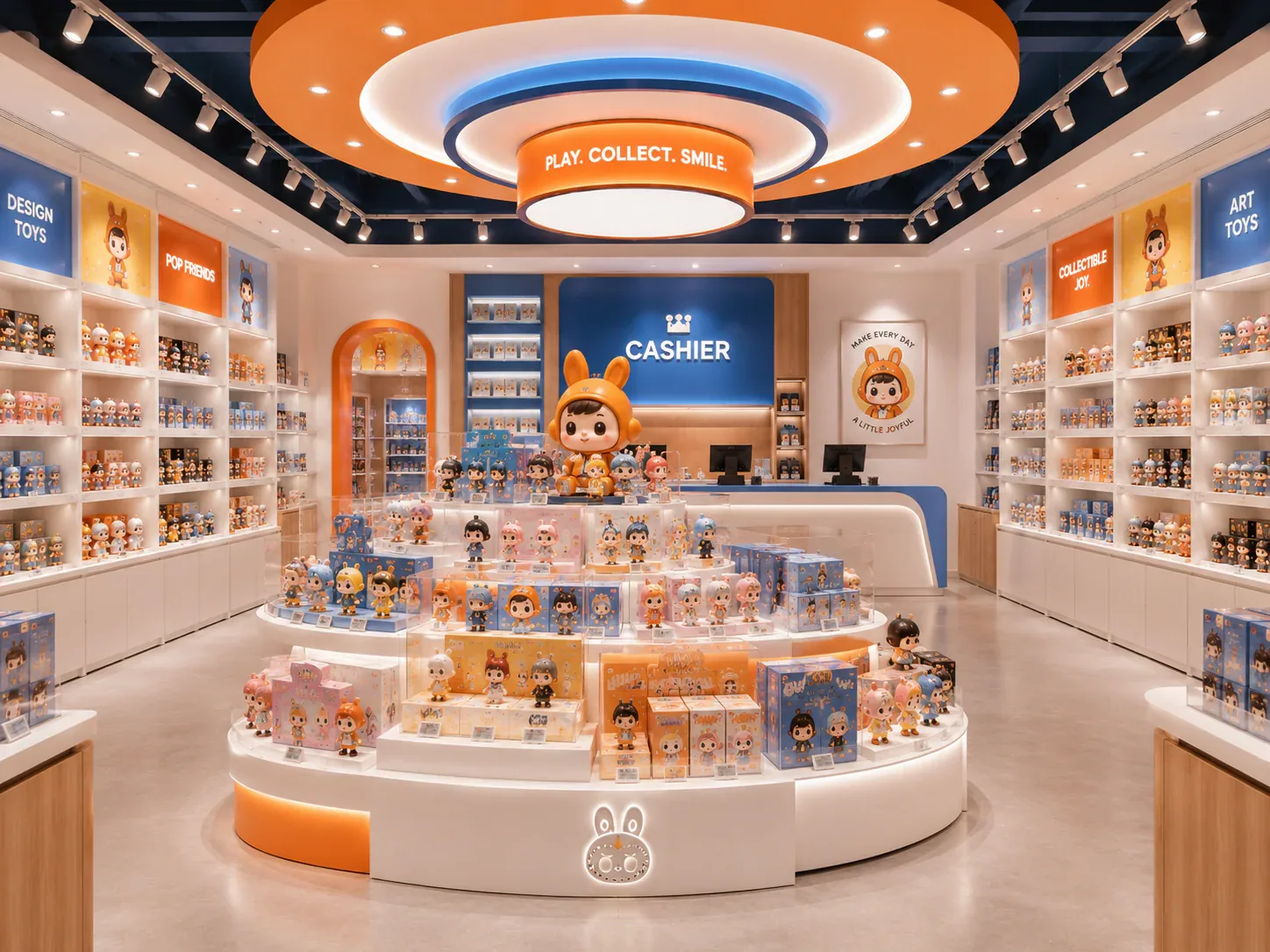
Prototype the fixture detail whose failure would change the buying decision, production method or safe use of the display. A full cabinet is not always the most useful first sample.
Three decisions to carry into your project.
- 01
Begin with a question that drawings cannot settle
- 02
Rank uncertainty by consequence and repetition
- 03
Choose the smallest representative sample
Start with the decision
Prototype the fixture detail whose failure would change the buying decision, production method or safe use of the display. A full cabinet is not always the most useful first sample. A connection, door corner, lighting section or merchandising mock-up can answer a narrower question before the buyer commits to repeated units.
This guide provides a risk-led prototype brief for retail fixtures. It does not establish a load rating, approve a material or report a completed BENSON customer project. The worked example is illustrative. Technical testing and destination requirements must be agreed for the actual configuration.

Begin with a question that drawings cannot settle
Write the uncertainty as an observable question. Can staff remove the largest figure through the proposed opening? Does a repeated frame connection assemble without forcing adjacent panels? Can the driver be replaced while the cabinet remains in position? These questions suggest different samples, people and review conditions.
A request to approve quality is too broad. Separate visual appearance, dimensional fit, operating function and documented performance. A finish chip may help compare color but cannot demonstrate a complete drawer mechanism. A printed model can communicate proportion but may not represent production strength or surface behavior. Identify which conclusions the sample can support and which remain open.
Protolabs describes the use of prototypes for design validation in its own manufacturing processes. That is useful background for separating fit from function; its injection-molding methods, tooling terms and service claims are not specifications for a retail fixture. The buyer still needs an order-specific test brief.

Rank uncertainty by consequence and repetition
List new details and changed interfaces, then consider what happens if each fails. A decorative panel used once may have a different approval route from a connector repeated across every bay. A visually small hinge change may affect the retrieval opening, hardware replacement and nearby merchandise at the same time.
Record how many units repeat the detail, how difficult correction would be after packing, and whether failure affects people, fragile merchandise or the opening schedule. This is a practical prioritisation exercise rather than a numerical safety assessment. Significant structural and electrical questions require appropriately qualified review; a buyer's visual approval cannot replace it.
Use the modular fixture specification record to identify repeated interfaces. Retain a reference to the smallest useful assembly that reproduces the real connection and operating conditions.
Choose the smallest representative sample
See the decision table below for the working record.
Ask whether the sample uses the proposed material, process and hardware. If it substitutes a component, label the substitution before review. A convenient temporary hinge or unfinished surface can be acceptable for one question while making another question impossible to answer. Avoid a general approval stamp that hides these distinctions.
Write the prototype acceptance record
The brief should identify the fixture reference, drawing revision, merchandise used, sample scope and exclusions. For each question, define the observation or measurement, the person reviewing it, the evidence to retain and the outcome required to close the issue. Agree any tolerance with engineering instead of borrowing an unexplained value from another product.
Include the conditions that matter. A door review should show adjacent shelves and the staff approach if they affect access. A lighting review needs the intended glass and merchandise. A connector review should use the specified fasteners and assembly sequence. Record tools and restrictions so another team can repeat the check.
Decide what will be retained: physical sample, photos, dimensions, video or a marked drawing. If a finish sample is approved, label it with its reference and date and agree who keeps the control sample. A phone photograph alone may not reproduce the approved color accurately.
Apply the method to an illustrative rollout
Suppose a retailer plans repeated wall bays and two special display corners. The straight bays use a familiar frame, while the corner introduces a new panel joint and a concealed lighting connector. The merchandise team also wants to check whether a large figure base can pass through the corner opening.
The buyer can request one representative corner assembly covering the joint, cable route and retrieval opening, plus separate finish samples. The review record states that it does not approve the remaining straight-bay quantities or certify the electrical system. This limits the sample to the uncertainties actually introduced by the design.
If the panel joint changes after review, the connector and cable clearance must be reconsidered together. The previous finish approval may remain valid if its material and process are unchanged. Record that distinction so a limited correction does not accidentally reopen every decision or leave an affected interface unchecked.
Close corrections before repeating the detail
Use an issue register with the original observation, correction, affected drawing and recheck result. Assign one person to consolidate comments. Different reviewers should not give conflicting instructions to production through separate messages.
Before batch release, confirm that the approved detail has reached the current drawing and bill of materials. Agreement on a physical sample is insufficient if the production files still contain the earlier arrangement. For repeated fixtures, specify how the first production article will be compared with the retained approval basis.
Prepare the next buying step
Send the prototype questions with the fixture schedule and identify which decisions remain commercial. Sample fees, ownership, shipping, revision limits and any credit against a later order must be stated in the quotation. Do not assume a prototype is free or that approval automatically starts the production clock.
Use the prototype approval checklist and the engineering deliverables guide to prepare the discussion. A useful prototype produces a closed question and a traceable production instruction, not simply a photograph of a cabinet that looks finished.
Compare one controlled basis.
How we apply this decision.
Send the prototype questions with the fixture schedule and identify which decisions remain commercial. Sample fees, ownership, shipping, revision limits and any credit against a later order must be stated in the quotation. Do not assume a prototype is free or that approval automatically starts the production clock.
Review BENSON capabilities →What still needs project confirmation.
Use the actual site, merchandise and supplier information to confirm the project-specific arrangement. Illustrative examples do not establish technical suitability.
Prepare the required inputs →Avoid these shortcuts.
- Treating a reference image as an approved production specification.
- Comparing suppliers without identical dimensions, quantities and delivery scope.
- Separating material, lighting or hardware decisions from the drawing revision.
- Leaving packing, local installation and site interfaces undefined.
Before the next approval.
- Begin with a question that drawings cannot settle
- Rank uncertainty by consequence and repetition
- Choose the smallest representative sample
- Record each open point, owner, due date and required evidence.
Trace the supporting information.
Protolabs: prototype tooling and design validation ↗Further reading referenced in this guide.
Content review policyUpdated 2026-10-22. AI-assisted buyer guidance; no independent technical review is claimed.
Move from research to a project decision.
Keep building the specification.

Recording Prototype Comments Without Conflicting Instructions
Record fixture prototype feedback in one numbered comment register, separate suggestions from authorised changes, and resolve disagreements before releasing instructions to the supplier. Each decision should identify the specimen, drawing revision, affected feature and person entitled to approve it.
Read next →
Reviewing a Fixture Prototype by Live Video
Review a fixture prototype by live video using an agreed viewing sequence, identifiable specimen and written observation record. The camera should connect each requested view to a specific purchasing question.
Read next →
Writing a Prototype Test Brief for a Collectible Cabinet
A collectible-cabinet prototype test brief should connect each purchasing question to a named specimen, controlled setup, review method, acceptance basis and decision owner. Write those fields before the sample is built.
Read next →Get a project-specific recommendation.
Send your store plan, product sizes, fixture quantities, destination and opening target. BENSON will identify the product fit, engineering inputs and quotation basis.
Start Your Display Project